
Disclosure: As an Amazon Associate, I earn from qualifying purchases. This means when you purchase through links on this page, I may earn a small commission at no extra cost to you.
MERACH Exercise Bike Review (2026)
The MERACH Exercise Bike is designed as a budget-friendly indoor cycling bike engineered for compact home cardio and quiet daily conditioning. Featuring a magnetic resistance system and alloy steel construction, the manufacturer targets apartment dwellers and residential lifters seeking smooth training without floor-rattling vibration. With native Bluetooth app integration spanning platforms such as Zwift and Kinomap, this stationary bike offers connected metrics without locking riders into a mandatory proprietary subscription. In this buyer-focused guide, we evaluate the listed frame capacity, flywheel resistance, adjustment points, and long-term ownership considerations to help you decide if it fits your space.
Table of Contents
Standout Features of the MERACH Exercise Bike
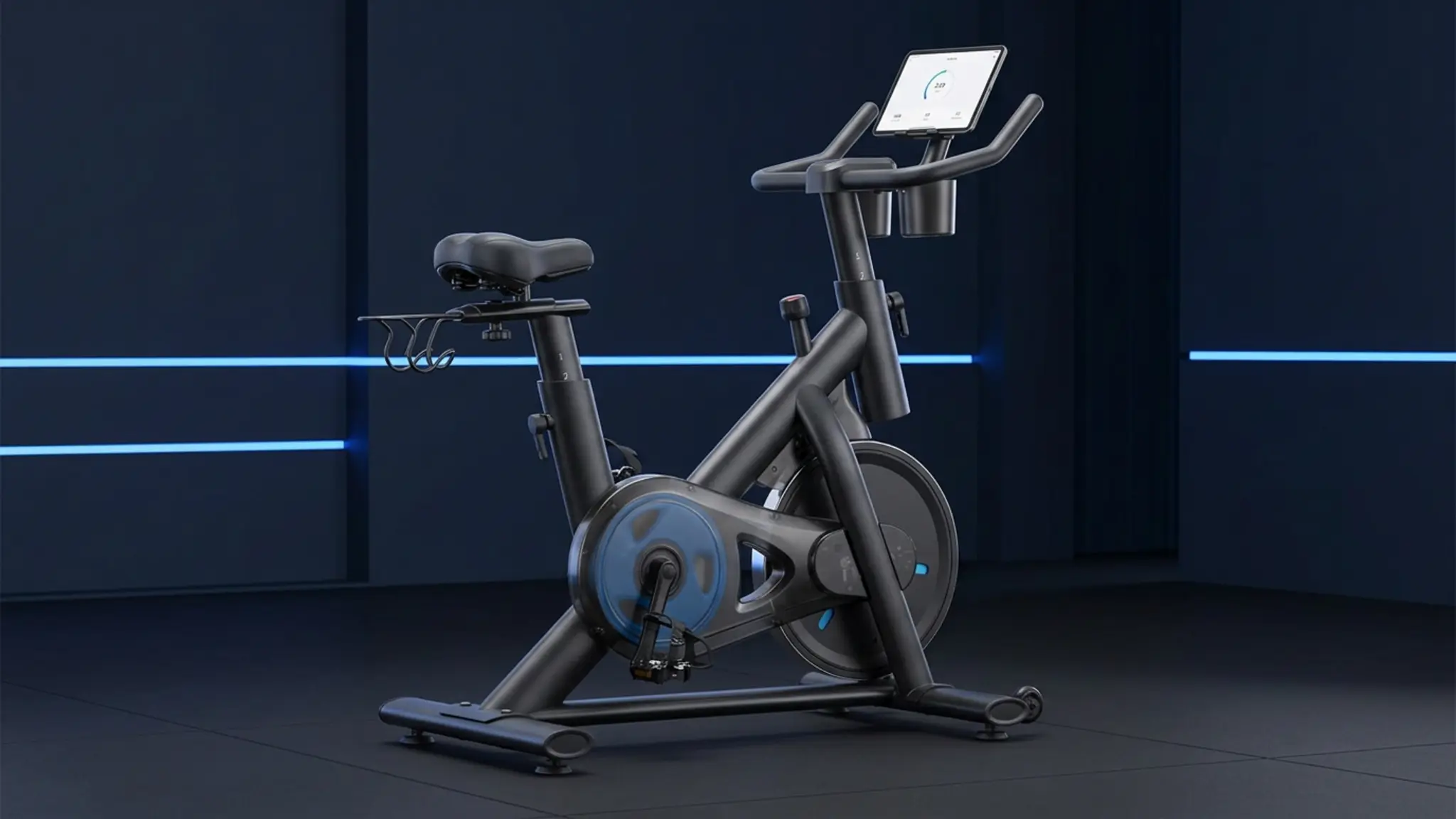
The core structural element of this home gym exercise bike is its 2.00mm thick alloy steel frame configured in an inverted triangle geometry. The manufacturer reports that this unibody design uses five or fewer weld points to reduce flex and supports riders up to 300 pounds. In addition, an electrophoretic finish is applied to help resist surface corrosion from sweat buildup over extended periods.
For resistance, the bike pairs an inertia-enhanced cast iron flywheel with ABS pulleys, industrial bearings, and contact-free magnets. According to listed specifications, the magnetic resistance system operates at noise levels under 25 dB, avoiding the friction noise and pad wear common to felt-brake systems. Tension is adjusted across a 0 to 100 percent continuum using a top-mounted dial, allowing progressive load changes from light warmups to high-torque pedaling.
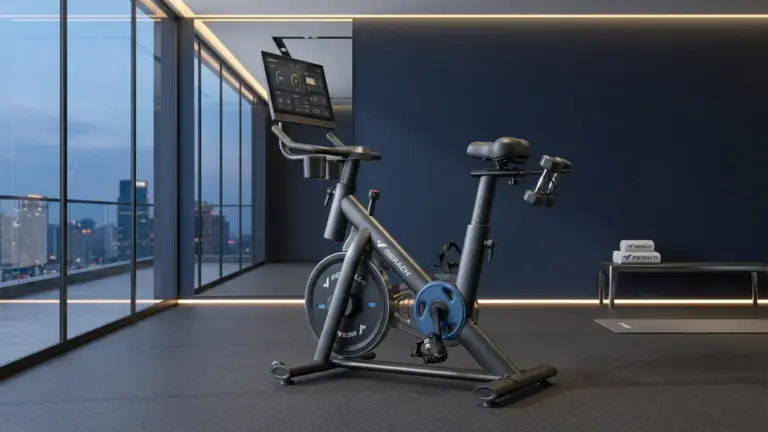
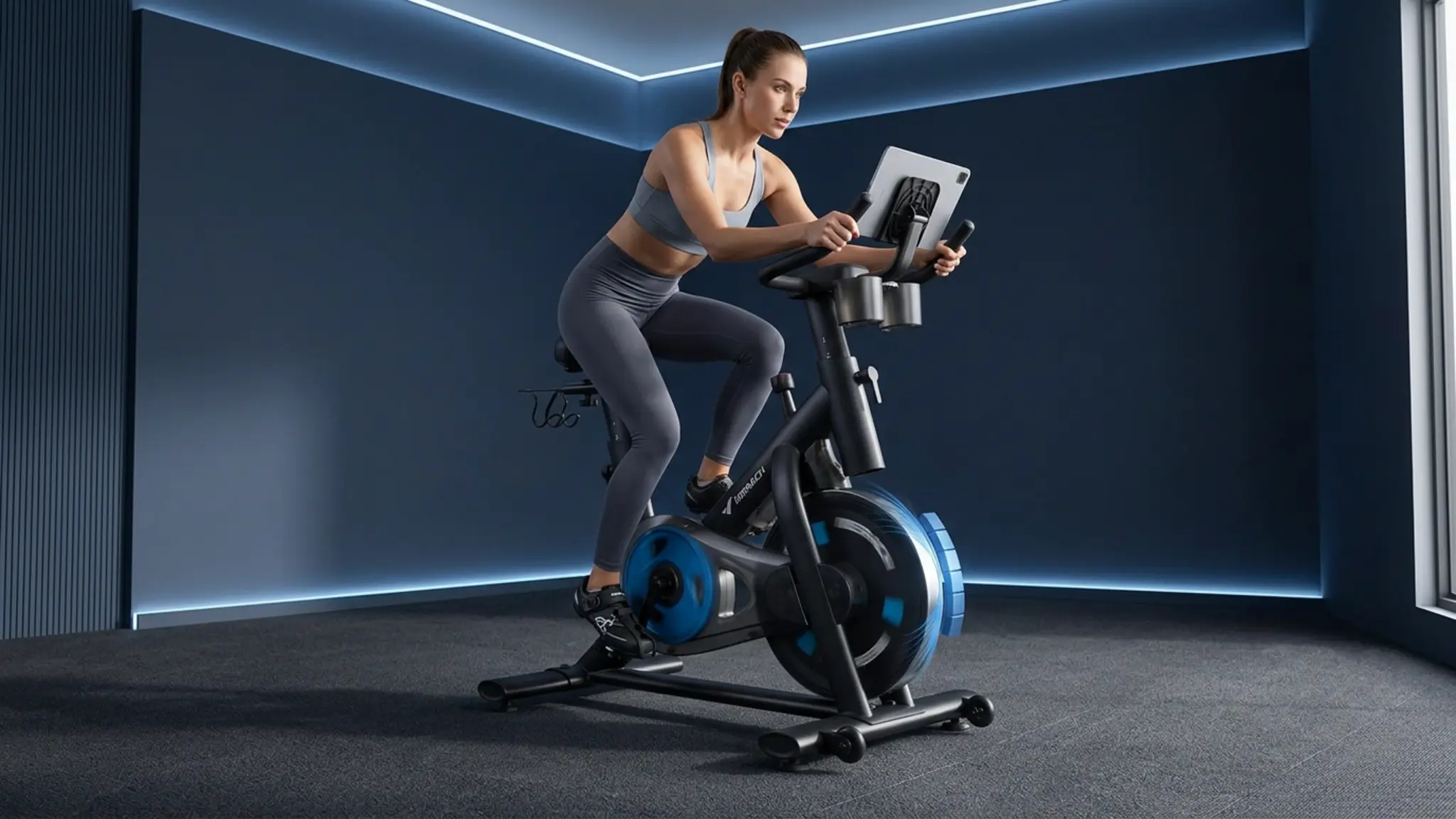
Rider positioning relies on adjustable seat handlebars that offer four-way saddle positioning (up, down, forward, aft) alongside two-way handlebar height adjustments. Foot retention is handled via strap-adjustable toe cages suitable for standard athletic shoes. Convenience features include an integrated tablet cradle, a dedicated dumbbell rack for dual-action conditioning, dual water bottle holders, and an onboard LED monitor.
| Specification | Manufacturer Listing Data |
|---|---|
| Price | $279.99 |
| Maximum Weight Capacity | 300 lbs |
| User Height Compatibility | 4’8″ to 6’2″ (56 to 74 inches) |
| Frame Construction | 2.00mm thick alloy steel (inverted triangle design) |
| Product Dimensions & Weight | 42.6″D x 19.3″W x 48.6″H; 62 lbs |
| Resistance Type | 0-100% micro-adjustable magnetic resistance |
| Operating Noise Level | Under 25 dB (listed) |
| Power Requirement | Battery powered (no AC cord required) |
| Wireless Connectivity | Bluetooth (MERACH App, Kinomap, Zwift, Google Fit, Apple Health) |
| Warranty Coverage | 1-year manufacturer warranty |
Best For — and Who Should Skip It
This stationary cycle is best suited for budget-conscious home lifters and apartment residents who need low-impact conditioning without heavy operating noise. The listed acoustic profile under 25 dB makes it an appealing option for early-morning workouts near sleeping family members or shared walls. Additionally, riders who prefer using their own tablets with Zwift or Kinomap will appreciate the open Bluetooth app integration.
Conversely, competitive cyclists seeking outdoor-simulation hardware should likely skip this model. The bike comes equipped with toe-cage pedals rather than dual-sided SPD click-in interfaces, and the handlebars adjust vertically rather than across four dimensions. Riders taller than 6’2″ or weighing over 300 pounds exceed the documented design envelope and should prioritize larger commercial platforms.
Day-to-Day Performance Expectations
At an assembled weight of 62 pounds, the bike offers a relatively light footprint that remains manageable to reposition using its front-mounted transport wheels. However, because it relies on a lighter frame than heavy-duty commercial studio trainers, high-cadence out-of-saddle sprint efforts will depend heavily on proper leveling. Users setting up on uneven floors or thick carpeting should ensure the adjustable leveling feet are balanced and consider adding a dense rubber equipment mat.
Regarding power and utilities, the console runs on independent battery power rather than a tethered AC power adapter. This setup expands placement flexibility across living rooms, basements, or garage corners since you do not need an adjacent electrical outlet. Routine maintenance involves wiping sweat off the alloy steel and checking pedal threads, as mechanical wear on magnetic systems is generally confined to bearings and moving pivot points.
How It Stacks Up Against Alternatives
Compared to entry-level mechanical friction bikes in the sub-$300 segment, the MERACH model distinguishes itself primarily through its silent magnetic system. Friction bikes rely on felt or leather pads pressing directly against the flywheel, which introduces audible rubbing noise and requires periodic pad lubrication or replacement. By utilizing contactless magnets, this bike reduces ongoing wear items while maintaining quiet operation.
When evaluated against connected studio bikes that feature built-in touchscreens, the trade-offs center on hardware complexity and ongoing costs. Integrated studio bikes provide large visual displays and automatic resistance tracking, but they often require mandatory monthly subscription fees to access basic functionality. In contrast, the MERACH bike relies on a bring-your-own-device approach, keeping recurring costs low while providing open Bluetooth connectivity to third-party fitness apps.
Common Buyer Questions
Does the MERACH Exercise Bike require a paid subscription to function?
No, the bike does not require an active subscription for standard operation. The onboard LED console displays basic metrics independently, and riders can connect via Bluetooth to free tracking utilities or supported third-party apps like Zwift without being locked into a proprietary platform.
What are the space and footprint requirements for this cycle?
The unit measures 42.6 inches in length, 19.3 inches in width, and 48.6 inches in height. Because it operates on a compact floor footprint under four feet long, it fits easily in smaller apartments, though buyers should plan for standard ceiling clearance based on their standing height during out-of-saddle pedaling.
Can the bike connect to home power outlets?
The listed configuration operates entirely on battery power for the digital console rather than an AC wall adapter. This design eliminates trailing cords across your floor space, though users will need to replace the console batteries periodically.
How involved is the stationary bike assembly?
According to manufacturer documentation, the bike arrives roughly 80 percent pre-assembled from the factory. Setup primarily requires attaching the front and rear base stabilizers, pedals, seat post, saddle, and handlebar assembly using the included hardware.
Verdict for 2026: If you are outfitting a compact home gym or shared residential living space in 2026, the MERACH Exercise Bike represents a practical, low-noise cardio purchase under $300. As long as your body dimensions fall within the documented 4’8″ to 6’2″ range and you are satisfied utilizing your own tablet for visual workouts, its contactless magnetic resistance and open Bluetooth compatibility deliver reliable everyday value.